From the desk ·
From the desk — April 2026
A note for restaurant operators who keep finding the library at 11pm.
The library got two things this month: the GBP playbook went up after a year of trying to write it, and the audit tool now scores Spanish-language sites with the same thresholds as English. If you ran the audit before April 12 and the Spanish pages graded weirdly, that’s why — rerun it. Saved scenarios automatically use the new logic.
Workshop accounts opened quietly this month too — if you’ve used the tools enough that bookmarking your own audits would be useful, click Sign in. The free side stays free; the account is just for cross-device persistence.
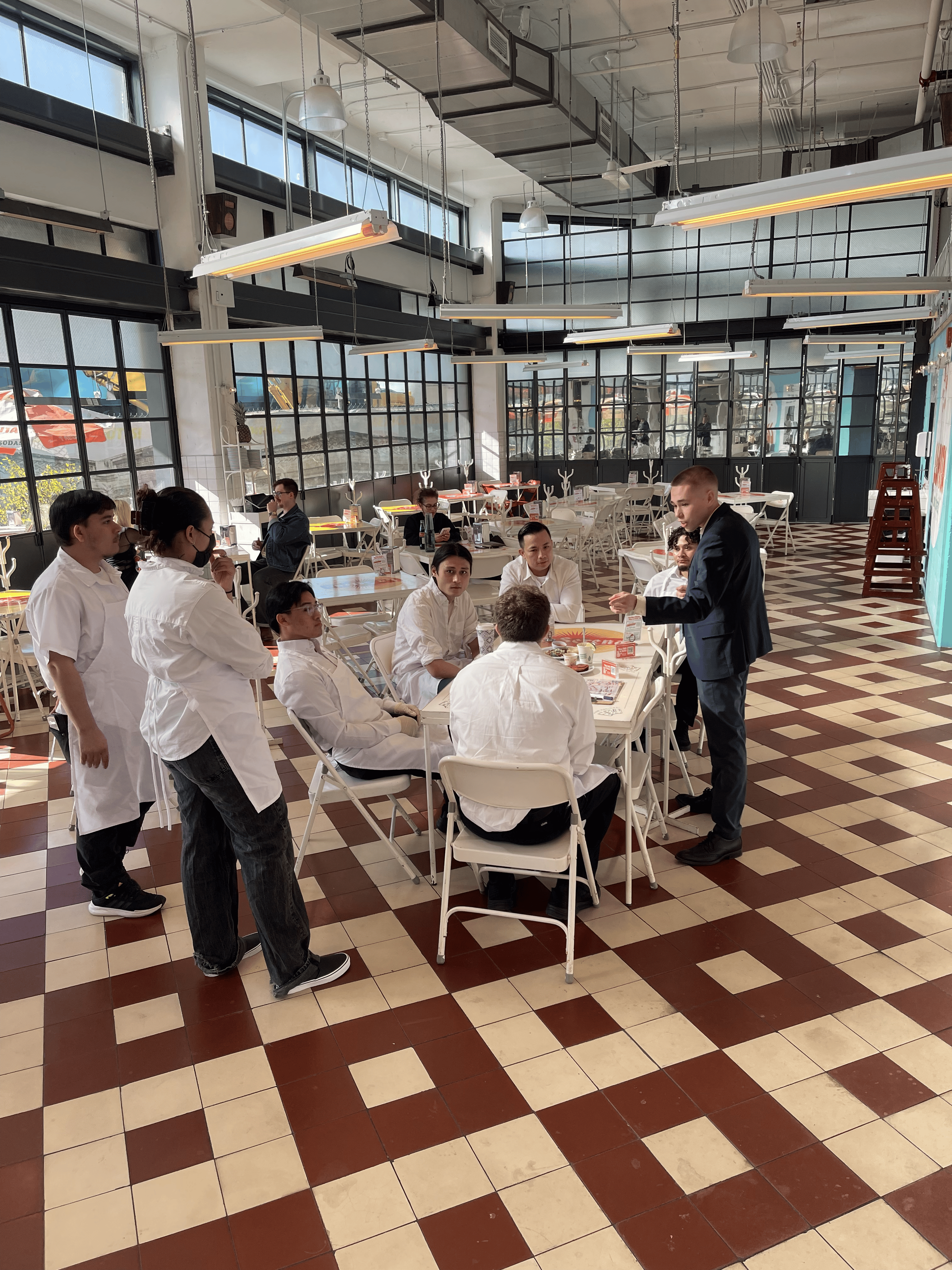
A muntin is the slender strip that holds a window together.
Small, quiet, and the reason the whole thing stands up. The name is the brief: structure brings clarity, and clarity is what gets customers from a Google search into your dining room.
— Don
Built out of the dining room, not into it.
I'm Don. I'm full-time front-of-house manager at Tacombi in Bethesda — a fast-paced taquería that opens for brunch and closes after the bar crowd leaves — where I lead the area marketing, outreach, and local design work alongside the managing partner. Before Tacombi I ran the floor at The Irish Inn at Glen Echo, a 1931 dining landmark on the Potomac. Two very different rooms; the discipline carries between them. I'm not guessing what independent restaurants are up against. I'm living it.
I started Muntin Digital because I kept watching small business owners juggle four vendors who never talked to each other — a designer, a developer, a social person, and a hosting company — and nothing matched. The website said one thing, the Instagram said another, and whoever printed the menus hadn't been given the logo file. So I built a studio that did all of it from one set of hands. The studio is retired now — but the instinct behind it, one operator’s view across the whole problem, is what Muntin is today, pointed at the numbers: the Cost Index, the free tools, and Muntin Ledger.
The advantage isn't theoretical. I answer the phone during a rush and hear the same three questions all night. I watch a four-top decide before they sit. I re-price a plate at 4pm because lunch 86'd the branzino and the cost moved. That operator's view — what actually costs you a table or a margin point — is what the tools are built from.
I work in English and Spanish. A lot of the kitchens I've been in run in Spanish, and a lot of the owners and staff I want to build for do too — so the whole site, not just a translated landing page, is available in both languages. Esta página en español →
— Don
A decade on the floor, still on the floor.
Most people who build software for restaurants have never managed one. This is the receipt.
-
Front-of-House Manager — Tacombi
Running front-of-house operations and leading the area's marketing, outreach, and local design initiatives alongside the managing partner. Tacombi's volume, bar program, and brunch-to-close pacing are a different discipline from a heritage room — every decision compounds fast, and the design and outreach calendar has to keep up.
-
Manager — The Irish Inn at Glen Echo
A 1931 dining landmark on the Potomac. I handled the restaurant's design work end-to-end — menus, event posters, internal templates — and led strategic relations with secondary vendors. Day-to-day quality control ran alongside Executive Chef Fernando (CIA-trained) to hold the line on consistency while lowering COGS. Hospitality with heritage, under a roof older than most of the customers.
-
Front-of-House Manager — Tacombi
The first run at Tacombi. Opening and closing procedures, inventory, cash handling, and training the team that ran the floor — building the workflow shortcuts that shaved minutes off the turn and made the rush less of a coin flip.
-
Server — Nobu
Front-of-house at one of the most demanding fine-dining rooms in the city. Order taking, food running, bussing — and overseeing servers through the shift to hold the room's service standard through a full book.
-
Floor Manager — Kapnos Kouzina
Supervised up to 25 employees per shift, produced the monthly sales, payroll, and new-hire reports, and ran the restaurant's Twitter, Facebook, and Instagram. Built and launched the kitchen's first successful kids menu — the one parents actually ordered from.
-
Server — Kapnos Kouzina
Where the floor education started. High-volume service, multi-table attention, and expediting the pass on the nights that mattered.
Certified for the parts that can't be winged.
Food safety, allergen handling, and alcohol service aren't design opinions — they're enforced standards. Holding the credentials means every site, menu, and campaign I build already respects what your jurisdiction requires.
-
ServSafe Food Protection Manager
The manager-level certification for food safety systems — the standard most jurisdictions require on-site during service.
-
ServSafe Allergens
Formal training on identifying, communicating, and preventing cross-contact for the nine major allergens.
-
ServSafe Food Handler
The foundational food-handler certification: temperature control, hygiene, and cross-contamination discipline.
-
RAM Alcohol Awareness
Responsible Alcohol Management training — intoxication signs, ID verification, and statutory liability for servers.
-
MC ABS ALERT
Montgomery County's Alcohol Beverage Services certification, required for alcohol service in the county.
How a decade on the floor became the product.
A few of the floor habits that turned into the Cost Index, the free tools, and Muntin Ledger.
Want to see
how this site is built?
The colophon page walks through the stack, the design tokens, the i18n pipeline, the URL restructure history, the audio narration, and the accessibility choices — every decision that went into making muntin.digital feel like one coherent thing.
The numbers I check on my shifts
are free for you to use.
No pitch, no signup. Cost a plate, read the Cost Index, or browse the library — the same numbers I check on my own floor. Questions come straight to me; I read every one.
Sourcing & corrections
Where the library’s claims come from, and how to flag one that’s wrong.
Operations claims (food cost ranges, prime cost bands, reply-time norms) are sourced from the National Restaurant Association annual reports, my ServSafe / RAM / MC ABS coursework, and 14 years of operating-floor experience listed in the timeline above. Web-engineering claims (page-speed thresholds, schema requirements, mobile usability rules) are sourced from Google Web.dev research, Lighthouse documentation, and the schema.org spec; all benchmarks are dated in the tool footers and reviewed quarterly.
Corrections are taken seriously. If you find a factual claim that’s wrong, an outdated benchmark, or a tool result that doesn’t match the citation, email don@muntin.digital with the URL and the specific line. I correct in-place with a dated note, not silently.
Sourcing standards last reviewed .